
Electrical Planning for Restaurants, Hotels and Commercial Properties
In hospitality, a reliable electrical installation is essential to the day-to-day operation of a business. Restaurants depend on it for kitchen equipment, refrigeration and lighting, while hotels require coordinated systems across guest rooms, reception areas, kitchens and communal spaces.
Planning these installations requires an understanding of how the building will be used, the equipment it needs to support and the demands placed on its electrical supply. This is particularly relevant on the French Riviera, where many hospitality businesses occupy older buildings that may require significant electrical upgrades to meet modern requirements.
Whether planning a new development or refurbishing an existing property, several considerations deserve attention from the outset.
Assessing electrical capacity
The first step is understanding whether the existing electrical supply can support the building's requirements. Commercial kitchens can place considerable demands on an installation. Ovens, induction hobs, extraction systems, dishwashers and refrigeration units may all operate simultaneously. Hotels have additional requirements, including air conditioning, lifts, laundry facilities and guest appliances.
Older buildings may not have been designed for this level of consumption. An electrical assessment should establish the available capacity, the anticipated load and whether the existing distribution board, cabling and circuit protection are suitable.
Three-phase electricity may be necessary for certain commercial installations, depending on the equipment and overall demand. It is also worth allowing for future requirements. Additional kitchen equipment, EV charging or upgraded air conditioning can increase consumption considerably. Planning for these possibilities early can prevent expensive modifications later.
Kitchen equipment and dedicated circuits

Commercial kitchens require careful electrical planning. Equipment must have suitable power supplies, correctly rated connections and appropriate protection for its operating environment.
High-demand appliances such as commercial ovens, induction hobs and dishwashers will often require dedicated circuits. The position of sockets and connection points should also be coordinated with the kitchen layout, keeping them accessible for maintenance and away from unnecessary exposure to heat, grease and moisture.
Extraction systems deserve particular attention. Their electrical requirements and controls should be coordinated with the ventilation design. Communication between the electrician, kitchen supplier and designer is essential. Resolving equipment positions and electrical connections before installation helps avoid costly changes once cabinetry and work surfaces are in place.
Lighting for hospitality environments
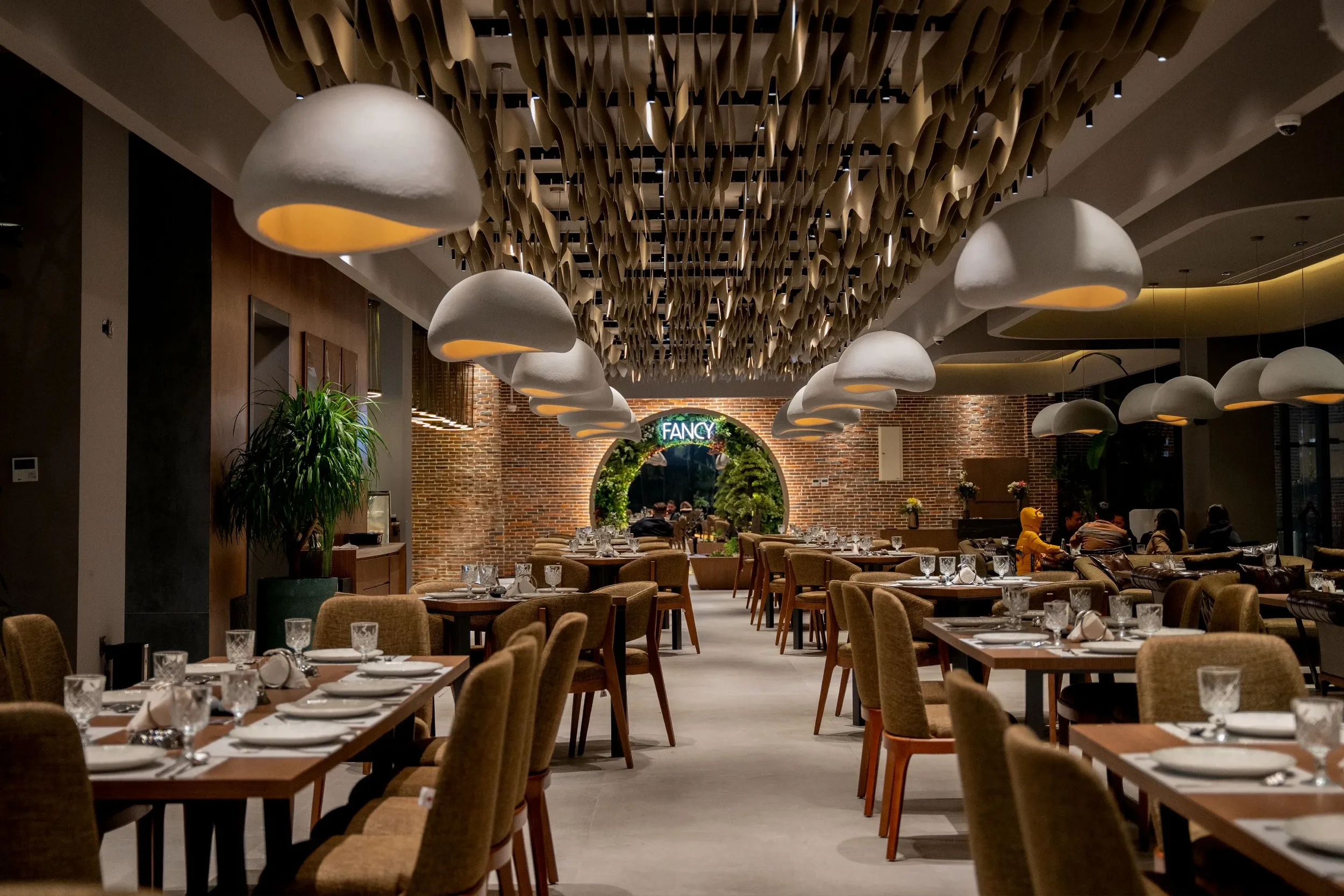
Lighting needs to support the activities taking place while contributing to the atmosphere of the space. A restaurant kitchen requires clear, practical illumination, while its dining area may benefit from warmer, softer lighting. Hotels have similarly varied requirements across reception areas, corridors, guest rooms and restaurants. These areas should be designed as separate lighting zones. Independent circuits, dimmers and programmed controls allow operators to adjust illumination according to the time of day and how each space is being used.
Glare, colour temperature and light distribution also deserve consideration. Poorly positioned fittings can cause discomfort for customers, while insufficient illumination in service areas can affect everyday operations. Lighting should be coordinated with the interior design from the beginning, particularly where decorative fittings, concealed lighting and architectural details are involved.
Emergency lighting and electrical safety
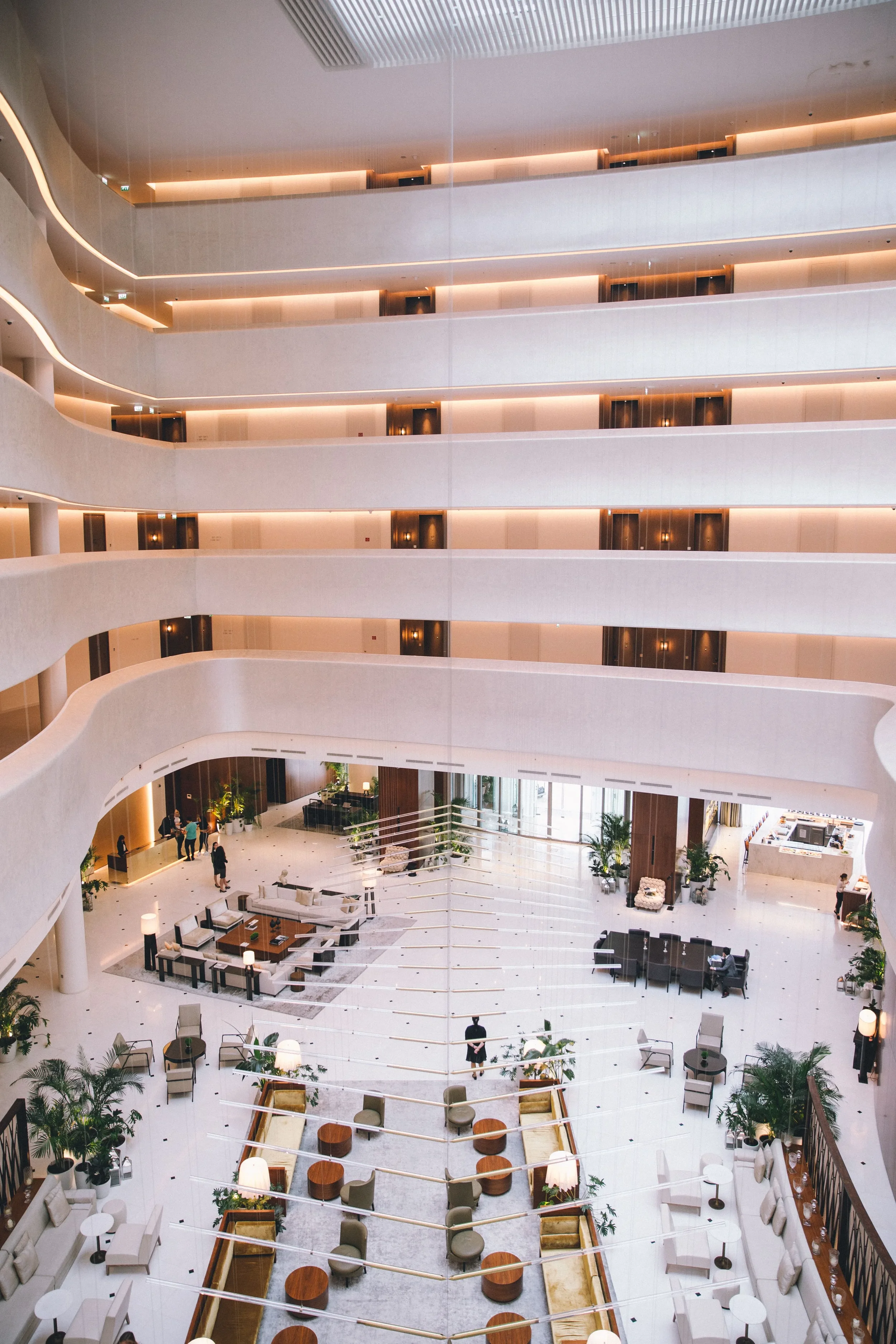
Emergency lighting is an essential requirement in commercial and hospitality buildings. In the event of a power failure, occupants must be able to identify escape routes and reach exits safely. Depending on the building's use and classification, this can include illuminated exit signage, emergency fittings along escape routes and lighting near changes in level or designated exits.
In France, establishments receiving members of the public are subject to ERP (Établissements Recevant du Public) regulations. Requirements vary according to the type and category of establishment, so the electrical design must reflect the applicable regulations. Emergency lighting also requires regular inspection and testing. Batteries, fittings and associated equipment must remain operational throughout the life of the installation.
Coordinating electrical and building services
Electrical installations are closely connected to other building systems, including heating, ventilation, air conditioning, security and access control.
During a refurbishment, these requirements need to be coordinated between contractors. A new air-conditioning system, for example, may require dedicated electrical supplies, additional capacity and control wiring. Hotel access systems may also integrate electronic locks, intercoms and security equipment. Smart building controls can bring several systems together, allowing lighting, climate control and access to be managed through programmed settings. The level of automation should suit the building and its operators, with straightforward controls often being more practical than unnecessarily complicated systems.
Minimising disruption during refurbishment
For an operating restaurant or hotel, electrical refurbishment presents an additional challenge: completing the work without unnecessarily interrupting business. Where possible, installations can be divided into phases. Hotels might complete one floor at a time, while restaurants may schedule electrical work outside service hours or during planned closures.
Before work begins, the electrician should establish which circuits need to be isolated, which areas will be affected and whether temporary supplies are required.
Existing installations also need to be investigated. Older Riviera properties may have undergone several renovations, leaving outdated drawings or undocumented electrical modifications. An initial inspection helps identify potential complications before work starts. Clear communication between the electrician, property manager and other contractors is equally important when coordinating access, interruptions and installation schedules.
Maintenance and long-term reliability
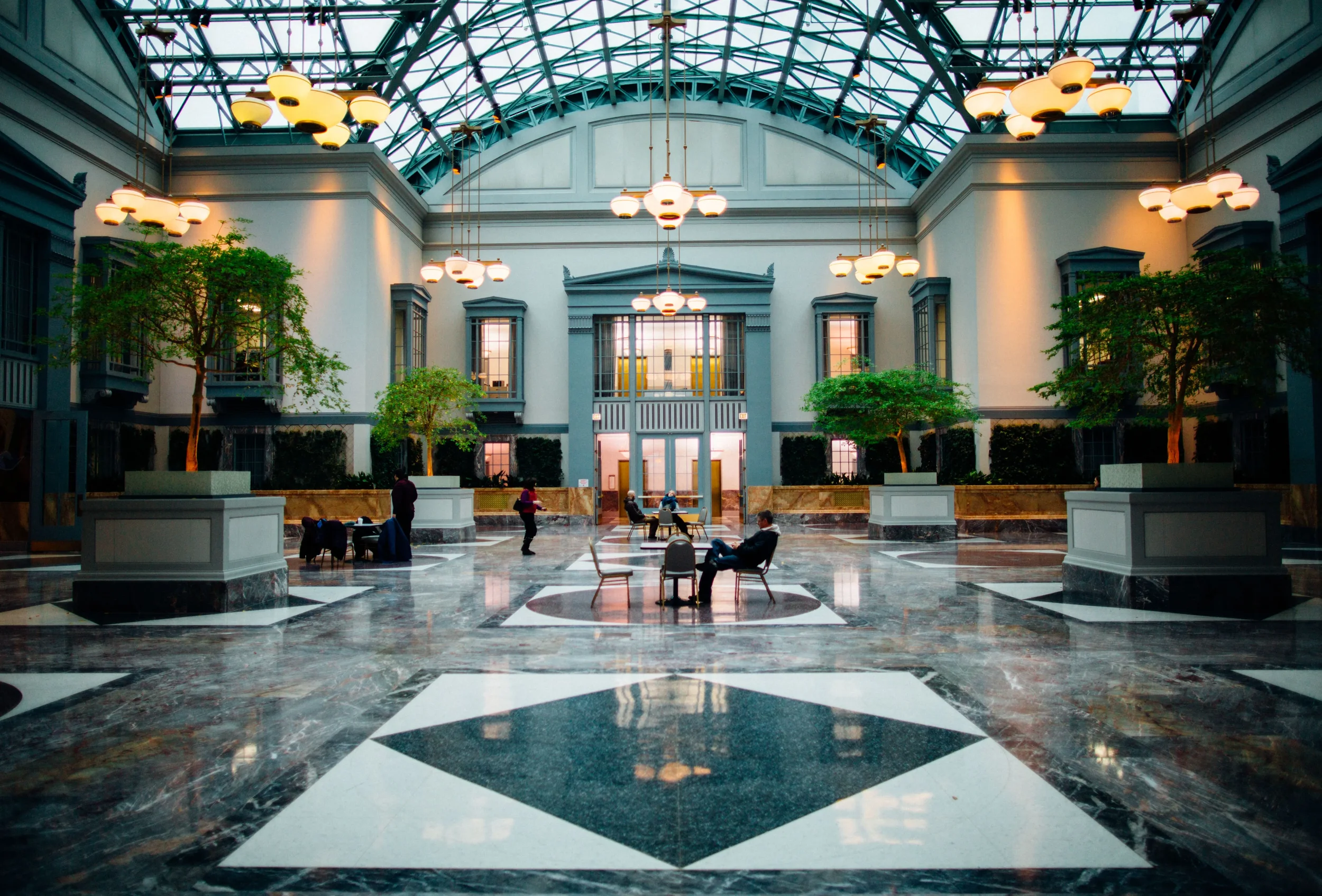
Commercial electrical installations experience considerable daily use. Kitchens expose equipment to heat, grease and moisture, while hotels and coastal properties may also face environmental conditions that accelerate wear. Regular inspections can identify deteriorating connections, damaged fittings and developing electrical faults before they cause significant disruption.
Preventative maintenance is particularly important for essential equipment such as refrigeration, extraction and lighting systems. An unexpected failure can have immediate consequences for business operations. Keeping electrical documentation up to date, including distribution board schedules, circuit information and equipment specifications, also makes future maintenance and upgrades easier.
Improving energy efficiency
Electricity is a significant operating expense for many hospitality businesses. Lighting, refrigeration, kitchen equipment and air conditioning can all contribute to consumption. LED lighting, occupancy sensors, timers and dimmable circuits can help reduce unnecessary energy use, particularly in areas that remain illuminated for long periods.
Energy monitoring can provide further insight into consumption across different areas of a building, helping operators identify equipment or systems that use more electricity than expected. The most effective improvements depend on the building and its operating requirements. Reviewing existing consumption is a useful starting point before investing in new equipment or controls.
Getting the electrical planning right
Electrical planning influences almost every aspect of how a commercial building operates. Sufficient capacity, reliable equipment supplies, effective lighting, compliant safety systems and accessible maintenance arrangements all contribute to a successful installation. Addressing these requirements early makes it easier to coordinate electrical work with the wider architectural and construction programme, particularly in older buildings undergoing renovation.
JL Electric provides electrical services across Nice, Monaco and the wider French Riviera, working on residential, commercial and hospitality projects. From electrical upgrades and lighting installations to smart controls and maintenance, each installation is approached according to the building's requirements.
Planning a restaurant, hotel or commercial refurbishment on the French Riviera? Contact JL Electric to discuss your electrical requirements.