
Securing a Luxury Home: The Electrical Systems Every French Riviera Property Should Consider
When people think about security for a luxury home, the first things that usually come to mind are cameras, alarms and gates. These are certainly important, but there is a much wider network of electrical systems working behind them.
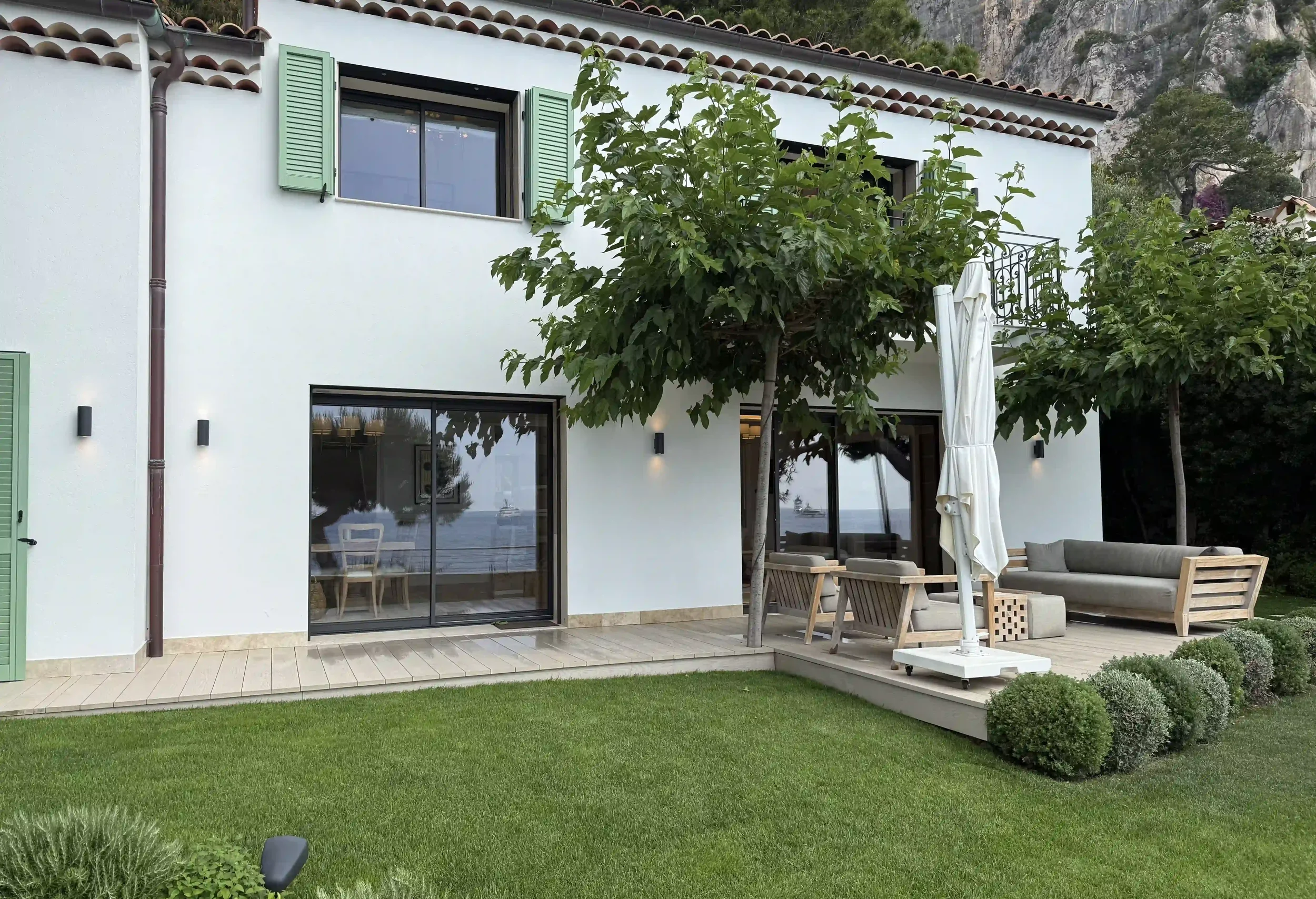
On the French Riviera, this is particularly relevant. Villas and apartments often have large gardens, multiple entrances, garages, terraces and extensive glazing, while many older properties have been renovated several times over the years. A modern security system therefore has to work with the architecture of the property and, just as importantly, with the electrical installation behind it.
For homeowners renovating or upgrading a property in Nice, Villefranche-sur-Mer, Saint-Jean-Cap-Ferrat, Monaco and the surrounding areas, it is worth considering security from the beginning of the project. Lighting, access control, CCTV, automated shutters, gates and smart-home systems can all be connected and controlled through the property's electrical infrastructure.
Security starts before you reach the front door
For a large villa, there can be several points where someone approaches the property: a pedestrian gate, driveway, garage, garden entrance or main entrance. Each presents an opportunity to improve both security and convenience.
Electric gates are a good example. A properly installed automated gate can be opened and closed remotely, operated by a keypad or access system, or connected to an intercom at the entrance. The electrical installation needs to provide reliable power to the gate equipment while also accommodating the controls and safety mechanisms required for its operation.
The same applies to automated garage doors. For a property where the garage is directly connected to the house, integrating the garage door with the wider access system can make it much easier to manage who has access to the property.
Video intercoms can add another layer. Rather than opening a gate or door without knowing who is outside, homeowners can see and speak to visitors before allowing them in. Depending on the system, this can also be managed remotely, which is particularly useful for second-home owners or property managers.
Exterior lighting plays a surprisingly important role

Lighting is often one of the simplest ways to improve the security of a property, but it needs to be designed carefully.
A completely dark driveway or entrance makes it difficult to see who is approaching. At the other extreme, excessively bright floodlights can be intrusive, detract from the architecture and create areas of deep shadow elsewhere on the property.
Good exterior lighting provides a more considered solution. Entrance lights, pathway lighting, driveway illumination and carefully positioned garden lighting can make it much easier to see what is happening around the property after dark.
Motion sensors can make this even more effective. A light can remain off when an area is empty and switch on when movement is detected. This can be particularly useful around gates, garages, side entrances and less frequently used parts of a garden.
Lighting can also be programmed through timers or smart-home controls. For a property that is unoccupied for part of the year, lights can be scheduled to come on at different times in the evening, helping the house appear lived in.
The electrical planning behind this matters. Exterior lighting needs appropriate power supplies and protection, and cables and connections must be suitable for outdoor conditions. On a new-build or major renovation, planning these routes before landscaping and finishes are completed can result in a much cleaner installation.
CCTV needs careful planning
Security cameras have become considerably smaller and more discreet, making them easier to incorporate into the architecture of a high-end property.
The important question is not simply how many cameras a house needs. Their position, viewing angle and power supply all need to be considered.
A camera covering a driveway, for example, may need to capture vehicles approaching the property as well as people entering on foot. Another camera may be better positioned to cover a garden entrance or terrace. Poor positioning can leave blind spots or result in a camera recording areas that are of little practical use.
There is also the question of how the cameras receive power and how they connect to the rest of the system. During a renovation, electrical contractors can plan the necessary cabling and power supplies while walls and ceilings are still accessible. This allows cameras to be positioned discreetly and avoids the need for visible cables later.
For luxury properties where appearance is important, this is particularly valuable. Security equipment should be functional without becoming a dominant feature of the architecture.
Access control can make a large property much easier to manage
Security becomes more complicated when a property has several entrances and multiple people who need access.
A private residence may have homeowners, family members, domestic staff, gardeners, cleaners, property managers and contractors coming and going at different times. Access-control systems can help manage this without relying entirely on traditional keys.
Depending on the system installed, access can be provided through intercoms, codes, electronic controls or other authorised methods. Some systems can also be managed remotely, allowing a homeowner to grant access while they are away from the property.
This can be particularly useful for French Riviera properties that are used as second homes. A property manager might need to let a contractor into the house while the owner is in another country, for example, without needing to arrange for someone to physically hand over a key.
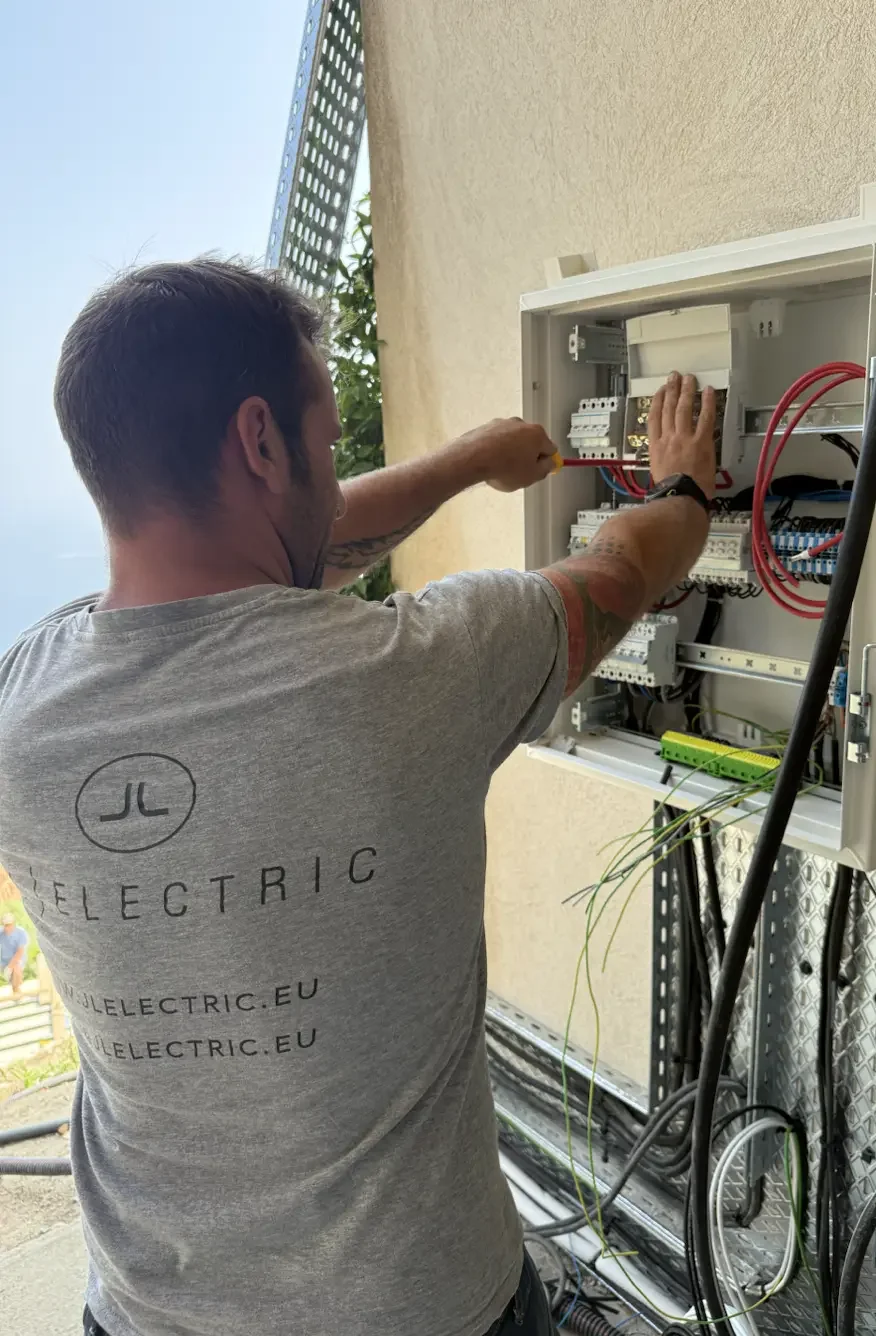
The electrician's role is to make sure the electrical infrastructure supporting these systems is reliable and properly integrated with the rest of the property.
Automated shutters provide security as well as comfort
Electric shutters and blinds are often installed primarily for convenience, temperature control or privacy, but they can also form part of a property's security strategy.
Shutters can be closed when the property is empty, either manually or according to a programmed schedule. Some smart-home systems allow homeowners to control them remotely, while others can incorporate them into wider routines involving lighting and other systems.
This can be particularly useful for properties that remain empty for weeks or months at a time.
Rather than every shutter operating independently, automation can allow multiple areas of the property to be controlled together. For example, shutters might close automatically in the evening while exterior lighting comes on around the entrance and garden.
These systems also need appropriate electrical connections and controls, which is why they are best considered during the renovation rather than once the interiors are finished.
Bringing security systems together
The biggest advantage of modern smart-home technology is that individual systems no longer necessarily have to operate independently.
Lighting, shutters, gates, cameras, intercoms, heating and air conditioning can potentially be brought together through a central control system.
For the homeowner, this could mean checking the property remotely before going to bed, closing shutters from a phone, turning on exterior lighting when arriving home or checking who is at the entrance without having to walk downstairs.
For a second home, the benefits are even greater. Being able to monitor and control parts of the property remotely gives homeowners much greater oversight when they are not there.
The electrical installation is effectively the infrastructure that allows these different systems to communicate and operate reliably. If that infrastructure has not been considered properly, even sophisticated smart-home equipment can become difficult to install or maintain.
What happens if the power goes off?
It is easy to overlook power continuity when planning security.
If a property loses power, systems such as cameras, intercoms, automated gates and other security equipment may also be affected unless suitable backup arrangements have been made.
For a large or high-value property, this is worth considering during the electrical design stage.
Backup power can help keep critical systems operating during an interruption, while appropriate electrical protection can help protect sensitive equipment from problems within the electrical supply.
This doesn't necessarily mean that every electrical system in the house needs to be backed up. It is more a question of identifying which systems are important enough to remain operational and designing the installation accordingly.
Electrical safety is part of protecting the property
There is another side to security that is sometimes forgotten: the electrical installation itself.
Many villas on the French Riviera have been modified over several decades. Extensions may have been added, kitchens replaced, lighting upgraded and new appliances introduced without the original electrical infrastructure ever being completely redesigned.
Modern properties can have significant electrical demands from air conditioning, swimming pools, electric gates, kitchens, EV chargers, lighting and home automation, all operating alongside one another.
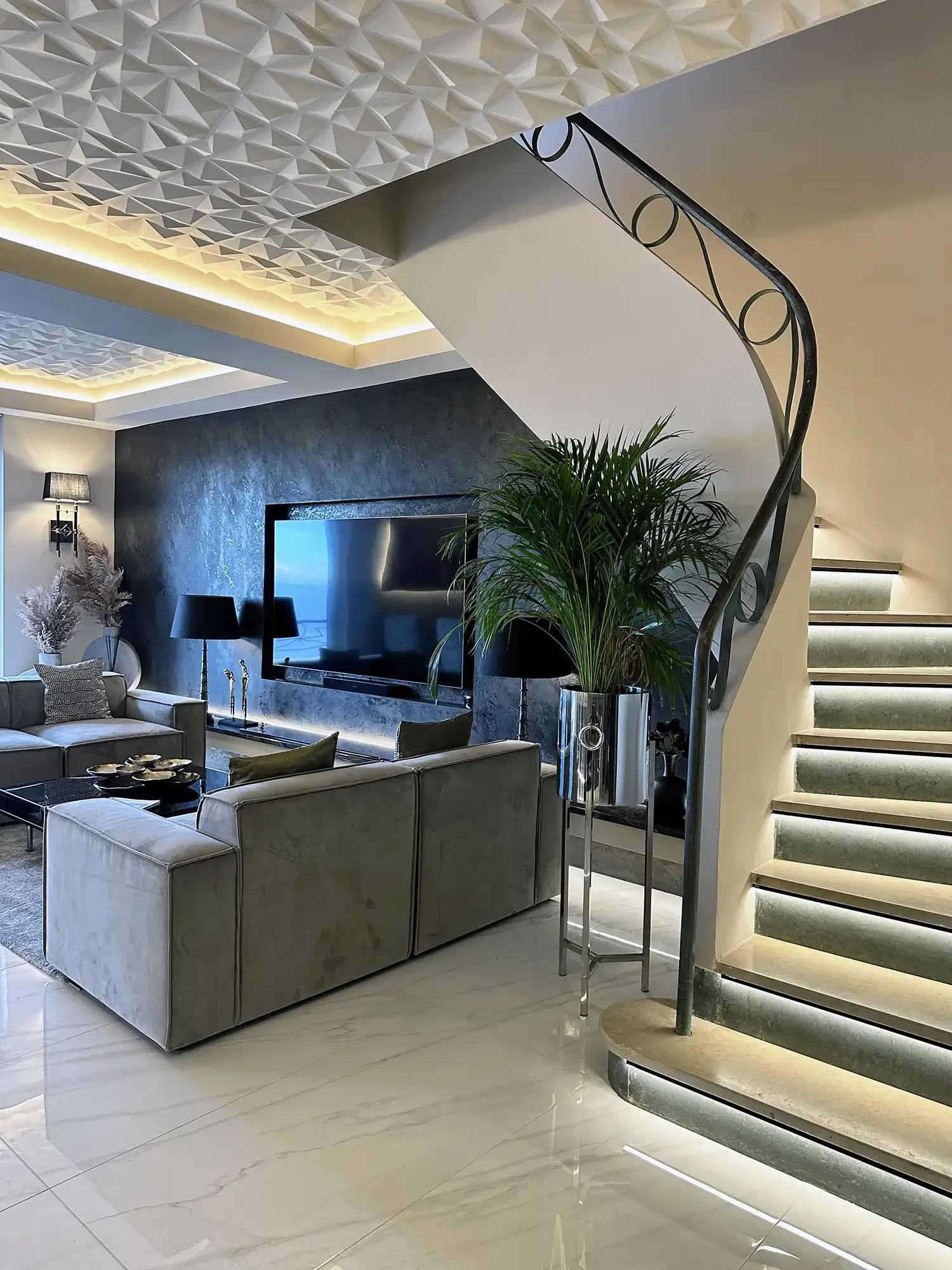
A renovation is therefore a good opportunity to assess the distribution board, circuits and protection throughout the property.
Upgrading an outdated electrical installation can improve reliability and reduce the risks associated with overloaded or unsuitable circuits. It also provides a much better foundation for adding modern security and automation systems.
Security should be considered early in a renovation
One of the biggest advantages of planning security alongside the electrical installation is that the work can be incorporated into the property rather than added afterwards.
Cables for cameras can be concealed before walls are finished. Power supplies for gates and access systems can be positioned where they are needed. Lighting can be planned alongside landscaping. Shutters and blinds can be wired as part of the electrical installation, while smart-home controls can be incorporated into the wider design.
This coordination becomes particularly important on high-end projects, where the finished appearance of the property matters as much as its functionality.
Trying to retrofit security systems after a renovation is complete can mean visible cabling, additional drilling and compromises over where equipment can be positioned. Planning ahead usually produces a cleaner result and gives each system more scope to work properly.
A complete electrical approach to home security

Security in a modern luxury property is rarely one isolated installation. It is a combination of systems that need to work reliably together.
CCTV can monitor the property. Lighting can improve visibility around entrances and gardens. Intercoms and access control can help manage visitors. Electric gates and garage doors can control vehicle access. Automated shutters can provide an additional physical barrier and make an unoccupied property appear lived in. Smart-home controls can bring many of these functions together, while a properly designed electrical installation provides the infrastructure supporting everything underneath.
For homeowners renovating a property on the French Riviera, considering these systems early can make a significant difference to the finished result.
JL Electric works with homeowners, property managers, developers and renovation professionals across the French Riviera, providing the electrical infrastructure required for modern residential properties. From distribution boards and exterior lighting to gates, access systems, automation and security infrastructure, careful electrical planning can help create a property that is safe, reliable and comfortable without compromising its design.
In a luxury home, good security should work quietly in the background. The technology should be there when it is needed, while the property itself remains the focus.